Search "power wheelchair factory" and most of the results will call themselves manufacturers. Many aren't. A large share are trading companies — sales offices that resell another factory's output, add a margin, and sit between you and the people who actually build the product. There's nothing illegal about that, but it costs you: a longer chain, weaker quality control, slower answers, and a partner who can't change the product or stand behind the warranty.
A document checklist tells you what to collect. This article is the other half — how to read the signals and tell the real builder from the middleman in your first few calls. Use it alongside a full supplier due-diligence checklist.
1. Can they show you the line — live, right now?
This is the single fastest test. Ask: Can you walk the production line on a live video call, today or tomorrow?
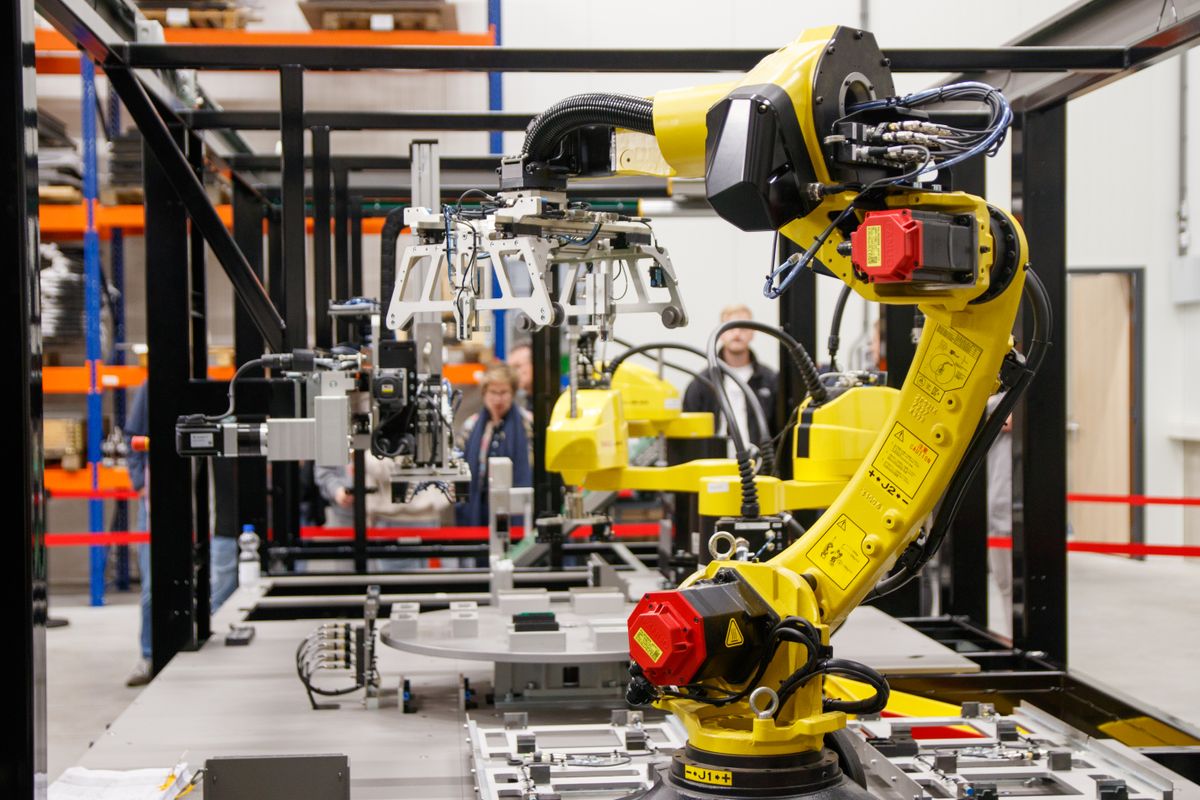
A real manufacturer can point a phone at its own welding cells, assembly stations and end-of-line testing on short notice. A trading company can send you a polished factory video (often the same clip everyone else uses) but stalls on a live, unscripted walk-through — because it isn't their floor. Watch for the difference between recorded footage and a real-time call where you choose what to look at.
Green flag: a live, this-week video tour where you can ask them to pan to a specific station. Red flag: "the factory is far / under renovation / busy" every time you ask to see it live.
Wanderoll builds its range on its own line and can show production on a live call.
2. Will they host — or even welcome — a factory audit?
A genuine manufacturer treats an on-site or third-party audit as routine; serious buyers do them all the time. A trading company has to borrow a factory it doesn't control, so it tends to discourage audits, delay them, or steer you to a "showroom" that is really just an office.
Ask: Can we book a third-party audit at the address on your certificates? Who do we meet on-site? The answer — and how quickly it comes — is revealing.

3. Can they produce real, current, per-model paperwork?
This is the cleanest paper test, and it catches a lot of middlemen.
Pull the ISO 13485, CE / EU MDR Declaration of Conformity and UN38.3 documents and read them properly. Three things matter:
- The certificates are current (not expired), issued by an accredited body, in a real manufacturer's legal name. Note that this legal name is often different from the brand on the box — that's completely normal; branded makers certify under their manufacturing entity's legal name.
- The DoC names your exact model, not just "the range".
- Whoever you contract with can stand behind that certification and warranty for your market.
A real manufacturer hands these over cleanly, per model, and explains the chain. A middleman gets vague — "for the range only," can't produce a current ISO certificate, or won't say who actually backs the warranty.
4. How deep does their product knowledge go?
Engineers and middlemen answer technical questions very differently.
Ask something specific — What's the controller's current rating? How is the frame joined — welded or bolted? What's the watt-hour rating of this exact battery, and which models stay under 300 Wh for cabin carry-on?
A manufacturer answers from the spec sheet without hesitation and can explain why a design choice was made. A trading company often gives vague or shifting answers, "checks with the factory" for basics it should know cold, or parrots marketing lines ("lightest / strongest") without the underlying numbers.
Tip: ask the same technical question twice, a few days apart. A reseller's second answer sometimes doesn't match the first.
5. Who controls customisation, tooling and warranty?
This is where a middleman is most exposed, because these decisions belong to whoever owns the line.
- Customisation (OEM / ODM): Can they actually change seat width, battery, controller or upholstery — or only "ask the factory"? A real manufacturer scopes a change on the call; a trader relays it and adds delay.
- Tooling & minimums: A maker can explain what a change costs in tooling and how it moves the minimum. A reseller often can't, because it doesn't own the tooling.
- Warranty & spares: Ask who honours the warranty and ships spare parts. If the answer is "the factory will" rather than "we will," your after-sales chain runs through a party that may not be accountable to you.
Wanderoll offers OEM (your brand on a certified model) and ODM (adjust seat, battery, controller, upholstery on its own platform), with tooling, minimums and lead time quoted per model and customisation scope.
6. What does the quote structure tell you?
Look at how the price is built, not just the number. A manufacturer can explain what drives the price — and how it moves with volume, customisation and freight — without bouncing every question back to someone else. A trading company tends to give one bundled, opaque figure and gets vague when you ask what's behind it.
Two more tells: a middleman is often noticeably slower to respond (every question has to bounce to the real factory first), and may be vague about lead times and capacity because the production schedule isn't theirs to commit.

Red flags vs green flags — at a glance
| Signal | 🚩 Likely a trading company | ✅ Likely a real manufacturer |
|---|---|---|
| Live line tour | Only a recorded video; stalls on a live call | Live, this-week walk-through where you pick the station |
| Factory audit | Discouraged, delayed, or "showroom" only | Welcomed at the certificate address |
| Paperwork | "For the range only," can't show a current ISO cert, or no verification path | Current, accredited certs in a real manufacturer's legal name, produced cleanly per model |
| Technical depth | Vague, shifting, "let me check with the factory" | Answers from the spec sheet; explains the why |
| Customisation | "I'll ask the factory" | Scopes seat / battery / controller changes on the call |
| Tooling & MOQ | Can't explain cost or how minimums move | Explains tooling cost and volume breaks |
| Warranty & spares | "The factory will handle it" | "We honour it; we ship the parts" |
| Pricing | One bundled number; vague about what's behind it | Can explain what drives the price and how it moves with volume & customisation |
| Response speed | Slow — every answer bounces to the factory | Fast — they own the answers |
Quick questions to ask on the first call
- Can you walk the line on a live video call this week?
- Can we book a third-party audit at your certificate address?
- Is the company on your ISO 13485 / CE / UN38.3 documents the same one I'd sign with?
- Can you change seat width, battery and controller — and what does that cost in tooling and minimums?
- Who honours the warranty and ships spare parts?
- Can you explain how the price moves with volume and customisation?
None of these guarantees a perfect partner. But a supplier who passes all of them is almost certainly building what it sells — and that means a shorter chain, tighter quality control, real control over customisation, and one accountable party behind your order.
Want to run these checks on us? Book a live line tour, ask the technical questions, and we'll quote your market and volumes. → Request a quote