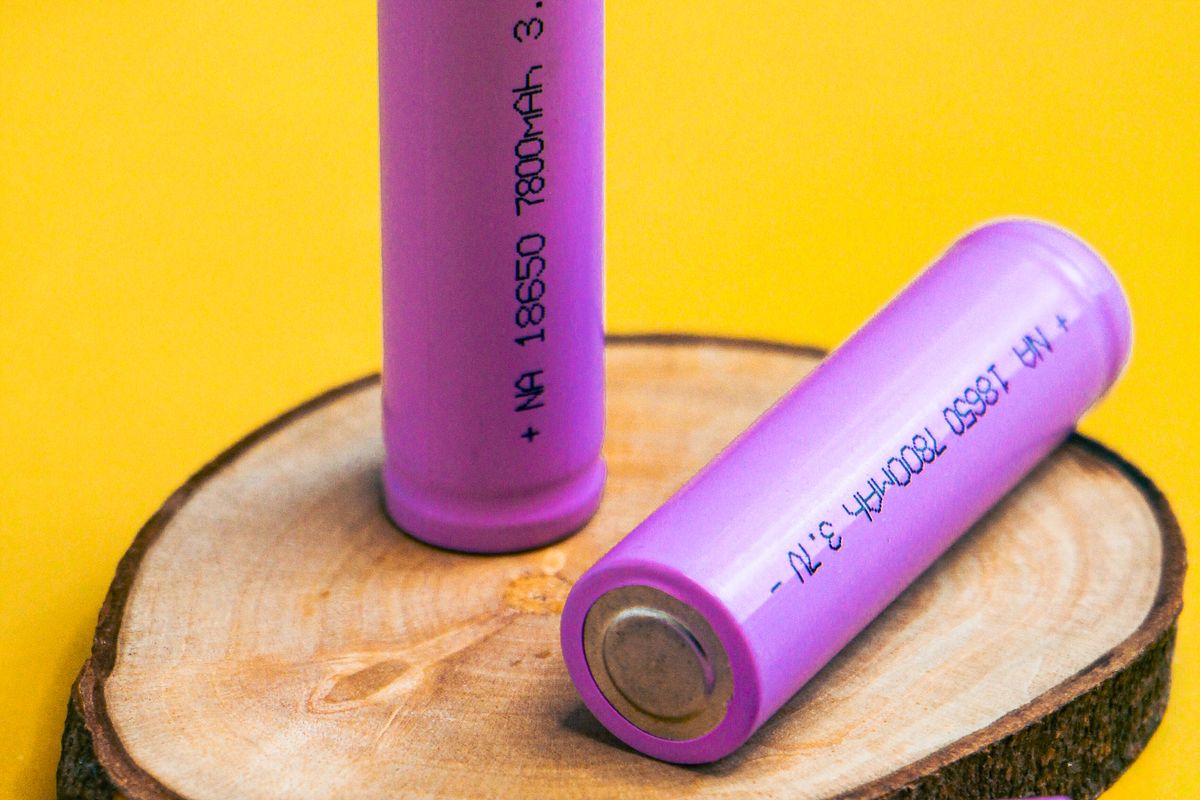
The battery is the most misread line on a folding power wheelchair's spec sheet. End-users ask "how far does it go?" and expect a single number, but range depends on far more than the battery — and the figure that actually governs the battery is one most buyers don't know how to read. For a distributor or importer, understanding watt-hours, range factors, removable packs and dual-battery setups is what lets you quote the right configuration and set honest expectations downstream. Here's the practical breakdown.
How to read a battery spec: Wh = V × Ah
Every lithium battery carries two ratings on its label — voltage (V) and capacity (amp-hours, Ah). Multiply them and you get the number that matters most:
Volts (V) × amp-hours (Ah) = watt-hours (Wh)
Watt-hours measure the total energy a battery stores — the closest thing to a fuel-tank size for an electric wheelchair. A 24 V battery rated at 10 Ah is a 240 Wh battery; the same 24 V at 15 Ah is 360 Wh. When you compare two chairs, Wh is the apples-to-apples figure — voltage alone or Ah alone tells you only half the picture, because a high-voltage pack with low Ah can store the same energy as a low-voltage pack with high Ah.
The takeaway for sourcing: always compare batteries by watt-hours, not by voltage or Ah in isolation. It's the one number that lets you line up different models — and different battery options on the same model — on a single scale.
What actually determines range
Here's the part to manage carefully with your own customers: the watt-hour rating is not the range. Wh sets the size of the energy tank, but how far that energy carries the chair depends on real-world conditions. The main factors:
- Battery capacity (Wh). More stored energy, more potential distance — all else equal.
- Rider weight and load. A heavier rider (plus bags, oxygen, etc.) draws more energy per kilometre, shortening range.
- Terrain and gradient. Hills, soft ground, thick carpet and frequent stop-start use all consume more energy than flat, smooth pavement.
- Temperature. Lithium batteries deliver less usable energy in cold weather; range typically drops in winter conditions.
- Speed, tyre pressure and driving style. Higher speeds and under-inflated tyres increase consumption.
This is why a quoted range is always a rated estimate under favourable conditions, not a guarantee. The honest script for your sales team: "up to X km per charge under ideal conditions — expect less with a heavier rider, hills or cold weather." Setting that expectation up front prevents the most common after-sales complaint in the category — "it doesn't go as far as the brochure said."
We publish rated range figures per model; treat them as ideal-condition estimates and frame them that way to end-users.
Removable batteries: portability, spares and maintenance
Most chairs in a modern folding range use a removable (quick-release) battery — and for a B2B buyer, that single design choice solves several problems at once:
- Lighter to handle. Lifting a folded chair into a car boot is far easier once the battery is out; the heaviest single component comes away separately.
- Charge anywhere. The pack can be carried indoors, to a desk or hotel room, and charged off the chair — useful where the chair can't reach a socket.
- Carry a spare for double the day. A second pack swapped in mid-day effectively doubles range without waiting for a recharge — a strong selling point for active or long-day users.
- Simpler maintenance and replacement. A removable pack is straightforward to replace at end of life or to RMA, rather than servicing a battery built into the frame.
Removability also feeds directly into travel logistics — a battery that comes out is the kind airlines will consider as carry-on (covered below). For your after-sales planning, quick-release packs mean you stock and ship batteries as a serviceable part, not a frame-level repair.

Dual-battery and multi-configuration models
Several chairs go further with two battery bays or a choice of pack sizes, letting you tune capacity to the use case. Across the Wanderoll line, the battery options are:
| Model (SKU) | Battery configuration (Wh) | What it's for |
|---|---|---|
| Air Lite (AIR-01) | 240 Wh, quick-release | Ultralight travel — lowest weight, single removable pack |
| City Range (CITY-01) | 360 Wh, removable | Everyday city range on a single pack |
| City One (CITY-02) | 288 Wh / 576 Wh (dual bay) | Choose capacity: one pack for lighter weight, two for extended range |
| City Flex (CITY-04) | 250 Wh / 499 Wh (two options) | Right-size the battery to the buyer's range need |
| Recline Pro (CMF-02) | Dual 576 Wh | Comfort/recline chair built for range and all-day use |
| Scout (SCOUT) | Dual removable packs, up to 20 km rated | Folding travel scooter; two packs share the load |
How to read this for a buyer:
- Single-pack models (Air Lite, City Range) keep weight and cost down — the right call for travel and value programmes.
- Dual-bay or two-option models (City One, City Flex) let one SKU serve two needs: order the smaller pack for a lighter, more portable chair, or the larger configuration for maximum range. The option you specify at order sets both the Wh and the price band.
- Dual-battery comfort chairs (Recline Pro) are built for daily range and recline, not for the lightest lift.
Exact watt-hours, range ratings and the available battery options for every configuration are released to verified buyers on request.
A note on boarding: removable ≠ cabin-cleared
One caveat to flag, because end-users always ask: a removable, UN38.3-certified battery is safe to transport, but that does not mean it can go in an aircraft cabin — cabin carry-on is decided by watt-hours, and packs above roughly 300 Wh (such as City Range at 360 Wh, or the 576 Wh configurations on Recline Pro and City One) typically exceed cabin limits and travel as freight. The full Wh-to-cabin rule, model by model, is covered in our dedicated airline-cabin guide — point buyers there for the boarding question.
Lithium chemistry and certification
A few specification points that matter for sourcing and shipping:
- Battery type. Wanderoll chairs use lithium (Li) batteries across the range; the specific cell chemistry is confirmed per order, so the exact pack matches your market and documentation needs.
- Transport certification. Each battery carries UN38.3 — the transport-safety certification confirming the pack has passed the required altitude, thermal, vibration and shock tests and is safe to ship by air, sea or road. UN38.3 is what makes the battery transportable at all; it is a separate question from cabin eligibility.
- Documentation. Test summaries and the battery document pack are released to verified buyers for due diligence and freight.
The practical sourcing rule: specify the configuration, confirm the watt-hours, and request the battery documents at the quote stage — that way the Wh on the spec sheet matches what you promise your own customers, and the paperwork is ready when the container ships.
Sourcing with Wanderoll — ten folding power wheelchairs, factory-direct, OEM/ODM-ready, each with removable lithium batteries and UN38.3 documentation. Tell us your market and how your buyers use their chairs — short daily trips, long-range or travel — and we'll match the model, confirm the watt-hours per battery configuration, and send the line sheet and certificates.
Need the exact battery specs for your buyers? Tell us your target market and use case, and we'll send the per-configuration watt-hour figures, rated range and the battery document pack. → Request a quote