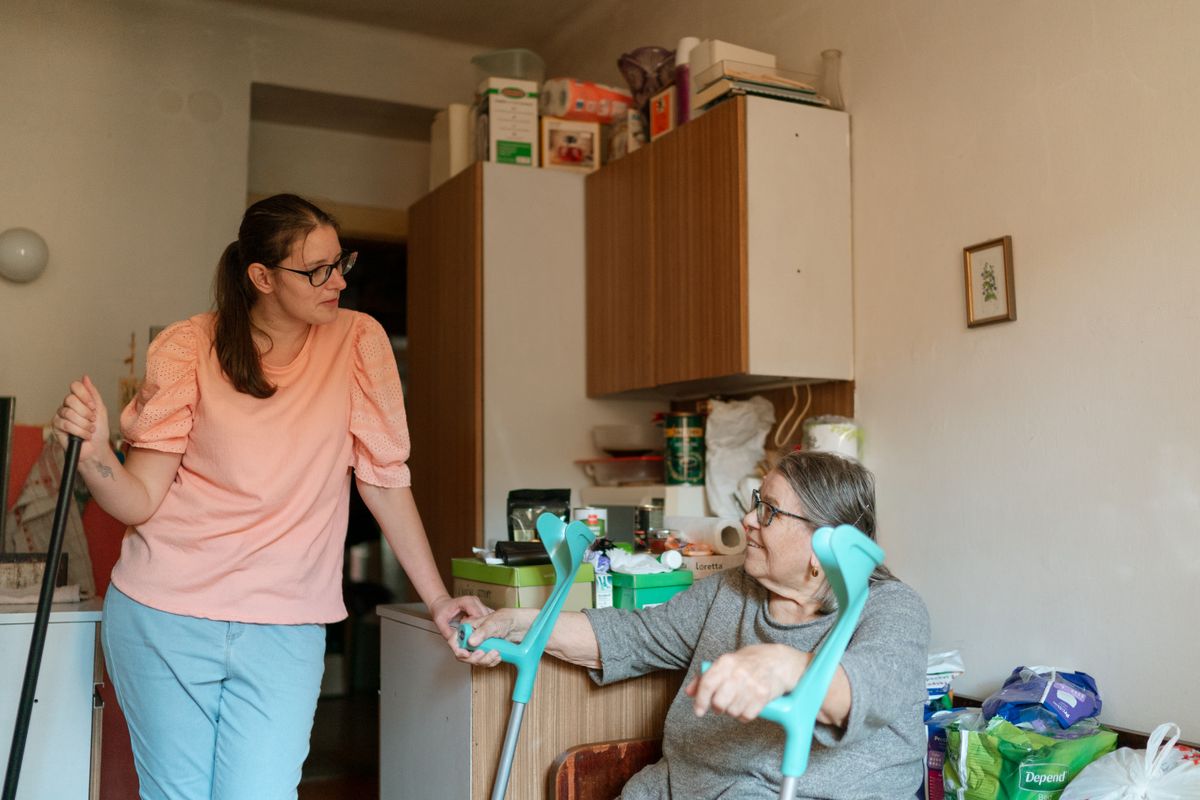
Buying power wheelchairs for a care home, rehab centre, hospital group or government tender is a different exercise from stocking a retail shelf. You're not selling one chair to one end user — you're equipping a fleet that gets shared between residents, pushed hard every day by staff, and audited for compliance. The questions that decide a retail sale (how light, how packable) matter far less than the ones that decide an institutional contract: will it last, will it position the resident safely, is it documented, and can I get parts in three years? Here's how an institutional buyer should weigh a power-wheelchair supplier, and where Wanderoll's ten-model line fits.
What institutional buyers actually weigh
A care or rehab fleet is judged on total cost of ownership and risk over years, not on the unit price of one chair. Five things tend to drive the decision:
- Durability and load rating — institutional chairs are used by heavier and frailer users, transferred constantly, and rarely babied. Frame strength and seat weight rating matter more than shaving off a kilo.
- Comfort and positioning — residents who can't reshift their own weight need tilt and recline to manage pressure and posture over long sitting days. This is a clinical requirement, not a nicety.
- Compliance and documentation — a medical-device buyer has to file the paperwork: quality-system and conformity evidence, per model, that survives an audit.
- Bulk supply and after-sales — a fleet needs consistent units across an order, plus spare parts and service so a chair doesn't sit broken in a corridor.
- Own-brand option — medical and care chains increasingly want their own name on the equipment, which an OEM supplier can provide.
A retail buyer optimises for the sale. An institutional buyer optimises for the fleet over its service life — and that changes which specs and which supplier capabilities matter.
Durability & load rating: the City series
For day-in, day-out institutional use by heavier users, the relevant numbers are frame robustness, drive power and seat rating — not portability. Two chairs in Wanderoll's City series carry a 150 kg seat rating:
- City One (CITY-02) — remote-control folding and a dual battery bay (288 / 576 Wh), rated to 150 kg. The dual bay lets a facility choose range per route without changing the chair.
- City Power (CITY-03) — steps up to twin 300 W motors with a PU backrest, also rated to 150 kg. The extra drive power suits heavier users, ramps and longer corridors.
For general daily fleet use, City Range (CITY-01) is the volume everyday chair — up to 25 km range with a removable battery at 22.7 kg — and makes a sensible backbone unit where a 150 kg rating isn't required. Across the City series a facility can match user weight, drive power and range without leaving one series, which keeps training and spares simple.
Comfort & positioning: the Comfort series
Pressure management and posture are where rehab and long-term care diverge most sharply from retail. Two Comfort models are built for users who sit for long periods and can't reposition themselves:
- Tilt (CMF-01) — a tilt-in-space chair with elevating orthopedic leg rests and twin 350 W motors (700 W total). Tilt-in-space keeps the seat-to-back angle fixed while changing the user's orientation, which redistributes pressure and aids positioning for residents who can't shift their own weight.
- Recline Pro (CMF-02) — adds an adjustable recline angle and orthopedic leg rests on a dual 576 Wh battery, at 31.3 kg. Recline opens the seat-to-back angle for rest, circulation and care tasks.
These are heavier, higher-spec chairs aimed squarely at care institutions and rehab, not carry-on travel. For an institutional buyer, this comfort-recline capability — tilt for pressure relief, recline plus orthopedic leg rests for posture and rest — is often the deciding clinical feature, and it's the part of the line a retail catalogue rarely needs.
Compliance & documentation: confirm it per model
Power wheelchairs are medical devices, so a care or government buyer has to be able to file the evidence and pass an audit. The marks that matter for institutional procurement:
| What the buyer needs | What it covers | How to verify |
|---|---|---|
| ISO 13485 | Medical-device quality-management system at the manufacturer | Ask for the current certificate; check it hasn't expired |
| CE marking + EU MDR 2017/745 | Conformity for the EU / EEA market | Get the Declaration of Conformity — per model, not a blanket claim |
| UN38.3 | Lithium battery certified safe to transport | Test summary per battery (for air & sea freight) |
| United States | FDA establishment registration + 510(k) where applicable | Wanderoll's 510(k) is in progress — registration not yet cleared |
Two practical points for a tender file. First, confirm coverage per model — not every model carries every mark, so a fleet spec should list the certificate against each SKU you actually order. Second, full certificates and test reports are released to verified buyers on request rather than published openly. Wanderoll manufactures under an ISO 13485 quality system and supplies CE / EU MDR conformity per model to verified buyers.

Bulk supply, spares & OEM for chains
The last mile of an institutional decision is supply and service, plus — increasingly — branding.
- Factory-direct supply. Wanderoll is a factory-direct manufacturer that builds its range on its own line, so a fleet order is consistent unit to unit and you deal with one accountable point of contact rather than a trading layer.
- Spare parts to distributors. Replacement parts are supplied to distributors so a chair doesn't stay out of service — keep a spares package in your supply agreement rather than ordering ad hoc after a breakdown.
- OEM / ODM for chains. A care or medical chain that wants its own brand on the fleet can put its logo, colours, manuals and packaging on proven, already-certified models (OEM), or adjust the platform itself — seat width, battery, controller, upholstery (ODM) — from low minimums. Minimum order quantities and lead times are quoted per model and customisation scope.
Institutional needs, mapped to the line
| Institutional need | Wanderoll capability or model |
|---|---|
| Durable fleet chair for heavier users | City Power (CITY-03) — twin 300 W, 150 kg seat |
| Range choice + fold convenience on a rated frame | City One (CITY-02) — dual bay 288 / 576 Wh, 150 kg seat |
| Everyday volume fleet unit | City Range (CITY-01) — up to 25 km, removable battery, 22.7 kg |
| Pressure management & positioning | Tilt (CMF-01) — tilt-in-space, orthopedic leg rests, 700 W total |
| Comfort recline for long-sitting residents | Recline Pro (CMF-02) — adjustable recline, orthopedic leg rests, dual 576 Wh |
| Medical-device quality system | Manufactured under ISO 13485 |
| EU market conformity | CE + EU MDR — Declaration of Conformity per model |
| Consistent fleet supply + spares | Factory-direct; spare parts supplied to distributors |
| Own brand on the fleet (chains) | OEM / ODM — logo, colours, manuals, packaging, from low minimums |
The takeaways for an institutional buyer
For a care home, rehab centre, medical chain or government tender, the right way to read a power-wheelchair line is by fleet fit, not unit appeal:
- Lead with durability and load rating. For heavier daily users, the City series at a 150 kg seat rating — with City Power's twin 300 W for ramps and corridors — is the institutional workhorse.
- Treat tilt and recline as clinical, not optional. Tilt for pressure relief and Recline Pro for posture and rest, both with orthopedic leg rests, are what long-sitting residents actually need.
- Build the tender file per model. ISO 13485 at the manufacturer, CE / EU MDR conformity per SKU, UN38.3 per battery — and FDA in progress, not cleared.
- Specify supply and spares up front. Factory-direct consistency and a spare-parts package keep a fleet running for years, not months.
- Use OEM for your own brand. A chain can run the whole fleet under its own name on already-certified models, from low minimums.
Equipping a care or rehab fleet? Tell us your volumes, the load and positioning needs of your residents, and which markets you cover — and we'll recommend the right models, send the line sheet and certificates, and quote OEM / ODM options. → Request a quote