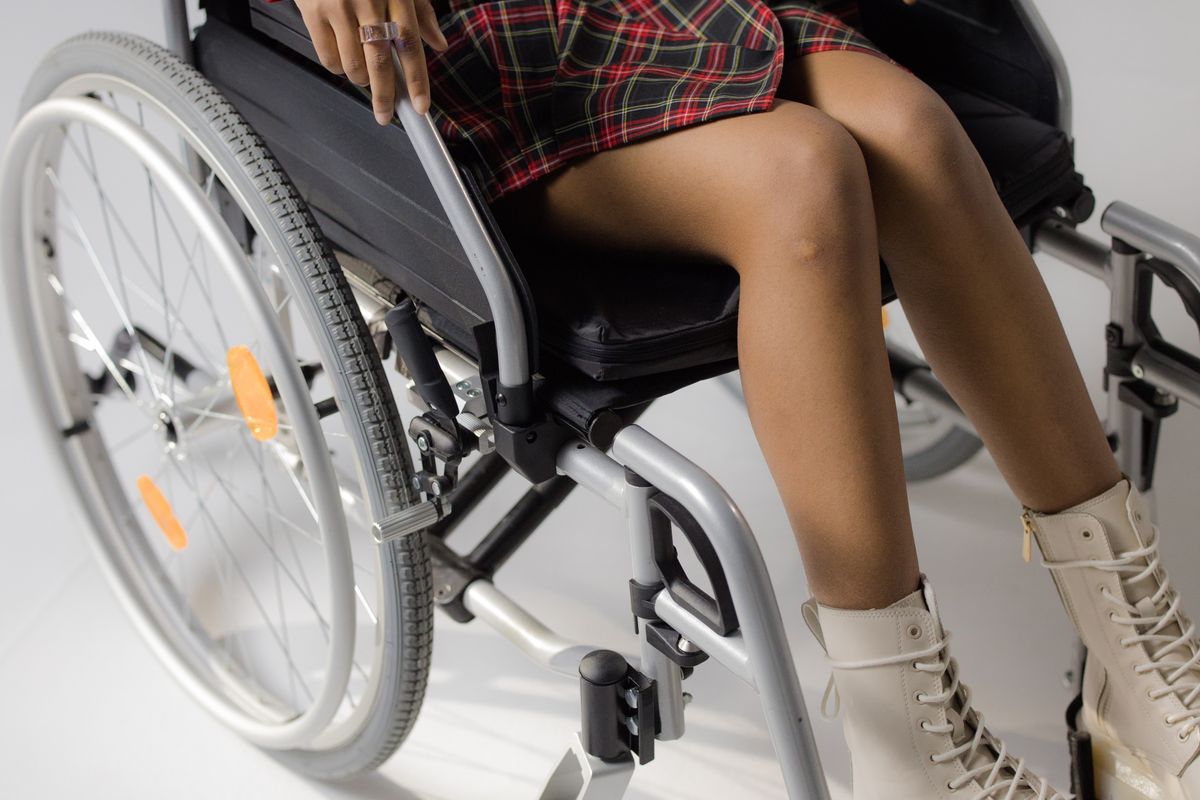
The sample is the last gate before you commit to a first bulk order. Once you sign it off, it becomes the reference standard your production run is measured against — so an hour spent checking the sample properly is the cheapest quality control you'll ever buy. A power wheelchair is also a medical device, so "looks fine" isn't enough: you need to check build, function, measured specs, battery, branding and documents against what was quoted.
Here's a systematic way to do it, grouped so nothing slips through.
1. Build & structure
Start with the frame, because it's the one thing you can't fix later.
- Welds — look for clean, even beads with no gaps, pinholes or grinding marks hiding a poor joint, especially at the fold hinges and the seat-to-frame junctions.
- Frame rigidity — with the chair open and locked, push and rock it; there should be no flex, twist or play in the main frame.
- Folding action — fold and unfold it several times. It should move smoothly, lock positively, and the latch should hold without rattling.
- Gaps & finish — panel gaps should be even, fasteners flush, paint or coating consistent with no chips or bare metal.
2. Function
Power it up and run it through everything a user would.
- Motor & drive — drive forward, reverse and turn on the flat; the chair should pull straight, with no hesitation, grinding or pulling to one side.
- Brakes — check that it holds on a slope and that the electromagnetic brake engages the moment you release the joystick.
- Controller — test the joystick through its full range, the speed settings, and the power button and battery indicator.
- Range, in concept — you won't run a full discharge test on one sample, but confirm the stated range and the test conditions behind it (load, terrain, speed) so you know what the quoted figure actually means.

3. Spec conformity (measured vs stated)
This is where samples quietly drift from the datasheet. Measure it yourself — don't take the spec sheet on trust.
- Weight — put the chair (and, separately, the chair with the battery) on a scale and compare to the quoted figure.
- Folded dimensions — fold it and measure length × width × height; this drives your cartoning, pallet count and freight cost.
- Seat dimensions — measure seat width, seat depth and seat height; these decide whether the chair fits your end users and your market's norms.
4. Battery & safety
Treat the battery as its own checklist — it drives both safety and shipping.
- Quick-release — confirm the battery removes and refits easily and locks securely; on travel models this is a headline feature, so it has to work cleanly.
- UN38.3 documentation — ask for the UN38.3 test summary for that exact battery; it certifies the battery is safe to transport by air and sea. Note it does not by itself mean the battery may go in an aircraft cabin — cabin carry-on depends on watt-hours (Wh), and larger packs typically travel as freight.
- Charger — check the charger matches your market's plug and voltage, carries the right markings, and that connectors and labelling are correct.

5. Branding & packaging (OEM/ODM samples)
If the sample is branded, check the branding as carefully as the chair.
- Logo & colour — confirm placement, size and colour match your artwork, and that the finish is durable, not a sticker that peels.
- Packaging — inspect the retail/export carton, inserts and protection: is it your design, and will it survive the journey?
- Anything customised — verify every ODM change you specified (seat width, upholstery, controller, battery configuration) is actually present on the sample.
6. Documents that ship with the sample
A sample isn't just hardware — it's a preview of the paperwork.
- Certificates — the certificates and test reports that apply to that model (CE / EU MDR Declaration of Conformity, ISO 13485, UN38.3). It is entirely normal for a certificate to carry the manufacturer's legal company name, which can differ from the brand name on the product.
- Manuals — confirm the user manual is present, in your language, and matches the chair in front of you.
The checklist
| Check | What to look at | Red flag |
|---|---|---|
| Welds | Beads at hinges & seat joints | Gaps, pinholes, grinding marks |
| Frame rigidity | Flex/twist when rocked | Visible play in main frame |
| Folding | Smoothness, latch hold | Sticks, won't lock, rattles |
| Motor & drive | Straight-line tracking | Pulls to one side, grinding |
| Brakes | Hold on slope, instant engage | Drifts, slow to bite |
| Controller | Joystick range, speeds, indicator | Dead zones, erratic response |
| Weight | Scale vs quoted figure | Heavier than stated |
| Folded size | L × W × H measured | Doesn't match carton plan |
| Seat size | Width / depth / height | Off-spec for your market |
| Battery quick-release | Removes & locks cleanly | Sticks, loose, won't seat |
| UN38.3 | Test summary for that battery | Missing or for another cell |
| Charger | Plug, voltage, markings | Wrong plug, no markings |
| Branding | Logo/colour vs artwork | Misplaced, peeling, wrong shade |
| Packaging | Carton, inserts, protection | Generic or flimsy |
| Documents | Certs & manual present | Missing or wrong model |
After sign-off
When the sample passes, keep it. Record the results, photograph the chair, and retain the signed-off unit as the golden sample — the physical reference your bulk shipment is checked against. If anything failed, list it, get it corrected, and re-sample before you release production.
Sampling with Wanderoll — samples are available on request, and each chair is function-tested on the line before it ships. Tell us the models and branding scope and we'll arrange a sample for sign-off.
Receiving a Wanderoll sample? We'll send the matching certificates and document pack so you can check the chair and the paperwork together. → Request a quote