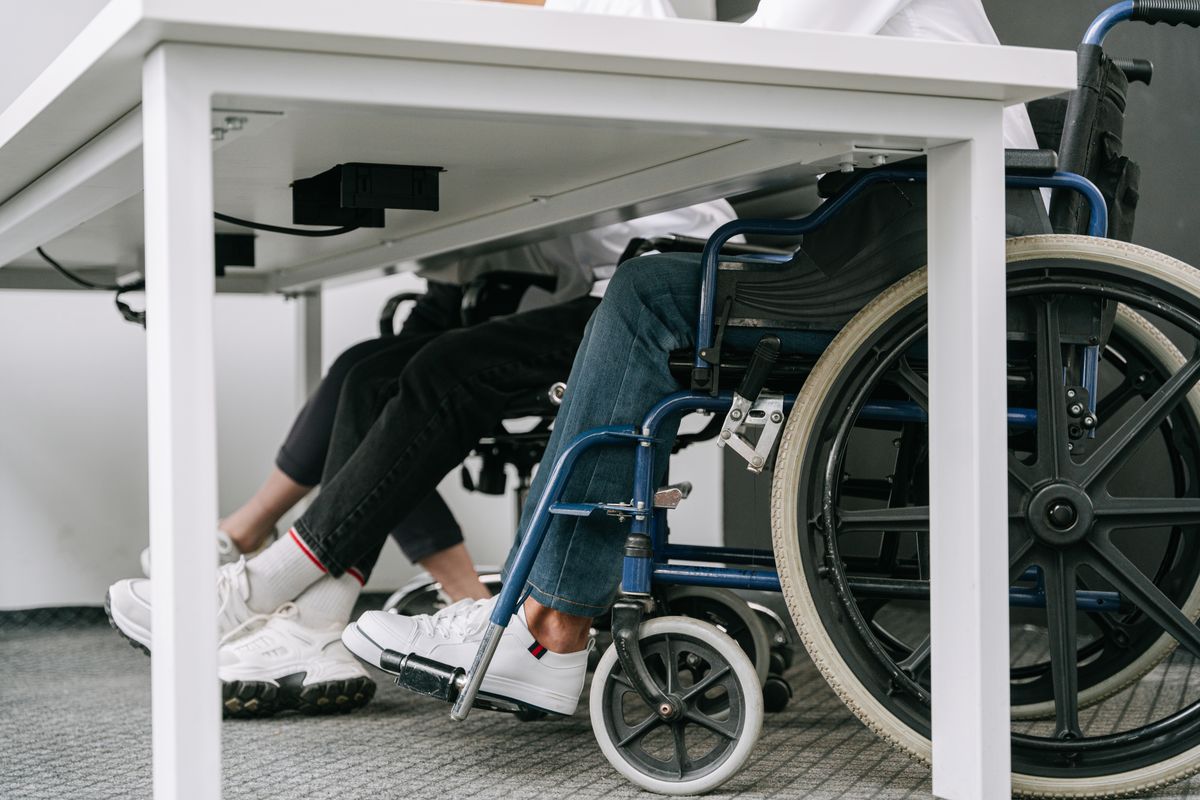
If you want to sell folding power wheelchairs in the United States, you are not selling a consumer product — you are placing a medical device on the US market, and that market is regulated by the FDA (US Food and Drug Administration). The chair can be excellent and your pricing competitive, but if the FDA paperwork is missing, wrong, or doesn't sit with the right party, your goods can be detained at the border and your listing can be challenged.
This guide explains the US FDA pathway in plain terms — what the steps are, who is responsible for each one, and roughly how the timeline works. It's written for distributors and importers deciding whether to bring a power-wheelchair line into the US, not for patients. And because this is the area where it's easiest to overstate a supplier's status, we'll be precise about where Wanderoll actually stands further down.
How the US classifies a power wheelchair
The first thing to understand is that the FDA regulates devices by risk class. Powered wheelchairs are generally handled as a Class II device — a moderate-risk category that, unlike the lowest-risk Class I, typically requires a 510(k) premarket notification before the device can be marketed in the US. (Class I is the lowest risk; Class III is the highest and follows a much heavier premarket-approval route — power wheelchairs do not sit there.)
Class II matters to you for one practical reason: it sets which steps below actually apply to your product.
The FDA pathway, step by step
For a Class II power wheelchair, the route into the US market involves a recognisable sequence of FDA obligations:
| Step | What it is | Plain-language purpose |
|---|---|---|
| Establishment registration | The facility registers with the FDA | Tells the FDA who is making / importing the device |
| Device listing | The specific device is listed with the FDA | Tells the FDA what product is on the market |
| 510(k) premarket notification | A submission showing the device is "substantially equivalent" to a legally marketed predicate device | The clearance that lets a Class II device be marketed in the US |
| QMSR / quality system | The manufacturer runs an FDA-recognised quality management system | Proof the device is built under a controlled, audited process |
A few notes that trip importers up:
Registration and listing are not the same as clearance. Being registered and having a device listed tells the FDA who you are and what you sell — it does not mean a device has been "FDA approved." For a Class II device, the 510(k) is the step that actually allows marketing, and the FDA itself is careful to say it does not "approve" 510(k) devices, it clears them.
510(k) is about a predicate, not a stamp of quality. A 510(k) argues that the new device is substantially equivalent to a device already legally on the US market. It's a comparison exercise with the FDA, not a marketing badge.
The quality system is moving to QMSR. The FDA's longstanding Quality System Regulation (QSR, 21 CFR 820) is being aligned with the international ISO 13485 standard under the new Quality Management System Regulation (QMSR). For a manufacturer that already runs an ISO 13485 quality system, that convergence is helpful — but the FDA quality requirement is its own obligation, separate from a CE mark or an ISO certificate.
Who is responsible for what
This is where US market entry differs from simply buying a certified chair, and where importers most often get caught out. FDA duties are split between parties:
- The manufacturer (the overseas factory that builds the device) is responsible for building under an appropriate quality system and for the technical substance behind any 510(k).
- The importer / initial distributor in the US has its own FDA registration and listing obligations once the device is brought into the country.
- A foreign manufacturer must also designate a US Agent — a contact based in the United States who acts as the FDA's point of communication with the overseas maker.
The takeaway: even a fully compliant factory does not remove your US-side responsibilities. If you import into the US, clarify early who holds which role — manufacturer, US importer, and US Agent — for your shipments.

How long does it take?
There's no single fixed number, and any supplier who quotes you an exact "clearance date" should be treated with caution. Establishment registration and device listing are administrative steps that are comparatively quick. A 510(k) submission, by contrast, is a substantive review: the manufacturer prepares the dossier and the FDA reviews it, and that review cycle takes time and can involve follow-up questions before a clearance is issued. Treat 510(k) as a process with stages, not a single transaction — and ask any supplier for their current status in writing, not a promise.
Where Wanderoll actually stands
We'll be exact here, because US buyers can — and should — check the FDA's public databases in seconds:
Wanderoll's FDA 510(k) is in progress. Registration is underway, and the device is not yet cleared. Until clearance is granted, we make no claim of FDA clearance — we do not describe our chairs as FDA-cleared, FDA-approved, FDA-registered or FDA-listed. If anyone presents Wanderoll that way, it's incorrect, and we'd rather you know that now than discover it at a border.
What we can do: we support buyers on the US registration pathway — sharing the technical documentation behind the submission, and working with you on the importer / US Agent roles described above. If you ask us for a clearance timeline, the honest answer is "in progress — timeline on request", not a fixed date. For shipments bound for the EU / UK and other markets this US discussion doesn't apply — there you're working with CE / EU MDR and ISO 13485 instead.
What an importer should verify
Whatever supplier you're talking to — us or anyone else — apply the same discipline to FDA claims as you would to any other certification:
- Ask for the FDA status in writing, and read it literally. "In progress" means in progress, not cleared. "Registered" is not "cleared."
- Check it yourself. Establishment registration, device listing and 510(k) clearances are searchable in the FDA's public databases — verify the claim against the record.
- Confirm the device, not just the company. A facility being registered does not mean your specific model is cleared — clearance attaches to a device.
- Pin down the US-side roles. Make sure you know who is acting as US importer and as US Agent before goods move.
- Don't let a CE mark or ISO certificate stand in for FDA. They're valuable, but they are not FDA clearance — the US has its own pathway.
If a supplier states its FDA position plainly, lets you verify it, and doesn't dress "in progress" up as "done," you're dealing with a partner that understands the US market. If the FDA language is vague or sounds too good to check, slow down.
Bringing a folding power-wheelchair line into the US? Tell us the models you're considering and we'll share our current FDA status in writing — in progress, stated honestly — along with the technical documentation and guidance on the importer / US Agent roles. → Request a quote